 Fawnly
How Many Steps a Day Do You Really Need?
Ten thousand steps is the number everyone knows, but it didn’t come from a study. Here’s what larger research now suggests, and how to turn it into a goal that fits your week.
For many adults, research links roughly 7,000 to 8,000 steps a day with most of the measured benefits. More steps may still help, but the gains get smaller. If you walk much less than that today, any steady increase is a good place to start. Ten thousand is a fine goal, not a magic threshold.
Where 10,000 steps came from
The number goes back to a pedometer sold in Japan in 1965 called the manpo-kei, which translates to “10,000-step meter.” It was a memorable round number for a new product, not a target taken from health research. It stuck because it’s easy to remember.
What the research says
Benefits rise quickly, then level off
In 2022, researchers pooled data from 15 studies covering about 47,000 adults. People who took more steps each day had a lower risk of death during follow-up, up to a point. The benefit leveled off at roughly 6,000 to 8,000 steps a day for adults 60 and older, and 8,000 to 10,000 for younger adults.
About 7,000 steps is linked with large benefits
A 2025 review of 57 studies compared people taking about 7,000 steps a day with people taking about 2,000. The 7,000-step group had a 47% lower risk of death from any cause, along with lower rates of heart disease, dementia, depressive symptoms, and falls. For several outcomes, the benefit curve began to flatten somewhere between 5,000 and 7,000 steps.
How many steps mattered more than how fast
A 2020 study followed about 4,800 US adults aged 40 and older. Compared with 4,000 steps a day, taking 8,000 steps was associated with a 51% lower risk of death from any cause. After accounting for total steps, the researchers saw no link between walking intensity and risk.
These are observational studies. They show that people who walk more tend to have better health outcomes, not proof that steps alone cause the difference. Still, the same pattern shows up across many groups of people, and it points the same way: more movement helps, and you don’t need an extreme number to benefit.
So how many steps should you aim for?
- Under about 5,000 a day: build up gradually. Even 1,000 extra steps a day is a meaningful change.
- Around 7,000 to 8,000: research suggests many of the benefits are within reach here.
- 10,000 or more: great if you enjoy it. Additional steps may still help, with smaller gains.
Steps aren’t the only measure. The CDC recommends that adults get at least 150 minutes of moderate-intensity activity, such as brisk walking, each week. A daily step goal is one simple way to work toward that.
If you have a health condition, are pregnant, or are recovering from an injury, ask your doctor what level of activity is right for you.
How to set a step goal you’ll actually keep
- Find your baseline. Look at your daily average over the last two to four weeks rather than a single day. In Apple Health, open Steps and switch to the week or month view to see it.
- Add a little. Set your goal 500 to 1,000 steps above your current average.
- Give it two weeks. If you reach it most days, raise it. If it feels like a chore, lower it.
- Plan for low days. Travel, weather, and busy weeks happen. Your weekly pattern matters more than any one day.
- Make steps easy to add. A brisk 10-minute walk is often around 1,000 steps. A walk after lunch or a phone call on foot adds up.
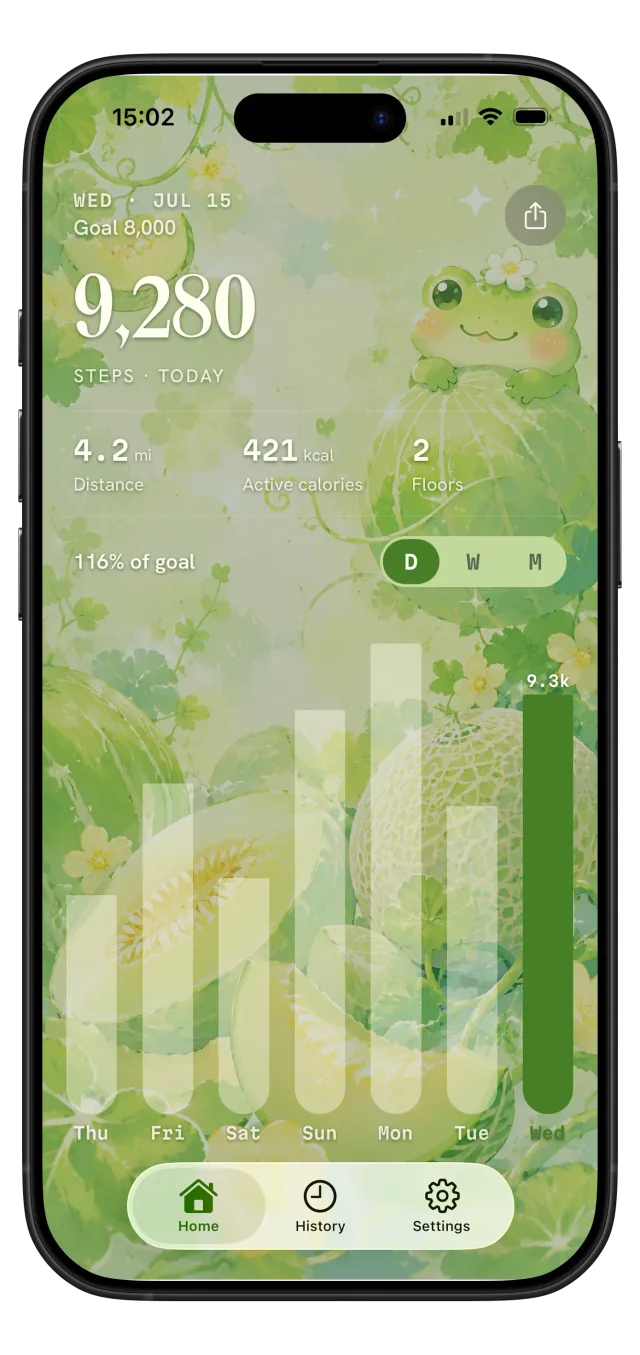
Set and adjust your goal in Fawnly
Fawnly shows your Apple Health steps next to a daily goal you choose. Set the number in Settings and change it whenever your routine changes, or turn the goal off if you’d rather just watch your progress. History shows your daily averages, best days, and goal streaks, and the free Home Screen widget keeps today’s progress in view.
Frequently asked questions
Is 10,000 steps a day too many?
Not for most healthy adults. It’s a perfectly good goal. It just isn’t required to see meaningful benefits.
Do steps from chores and errands count?
Yes. Steps count wherever you take them, as long as your iPhone or watch is with you to record them.
How many steps are in a mile?
Roughly 2,000 to 2,500 steps per mile, or about 1,300 to 1,500 per kilometre, depending on your height and stride.
Should older adults aim for fewer steps?
Research suggests the benefit levels off sooner for adults 60 and older, at about 6,000 to 8,000 steps a day. Choose a goal that’s comfortable and safe for you.
Sources
- Paluch AE, et al. Daily steps and all-cause mortality: a meta-analysis of 15 international cohorts. The Lancet Public Health, 2022.
- Ding D, et al. Daily steps and health outcomes in adults: a systematic review and dose-response meta-analysis. The Lancet Public Health, 2025.
- National Cancer Institute. Higher daily step count linked with lower mortality, on Saint-Maurice PF, et al., JAMA, 2020.
- Centers for Disease Control and Prevention. Adult Activity: An Overview.
This article is general information, not medical advice.